


21 May 2026
Acting Locally for Global Impact: The Power of Taking Action for Nature A Sustainability Vision from Local to Global by SSP
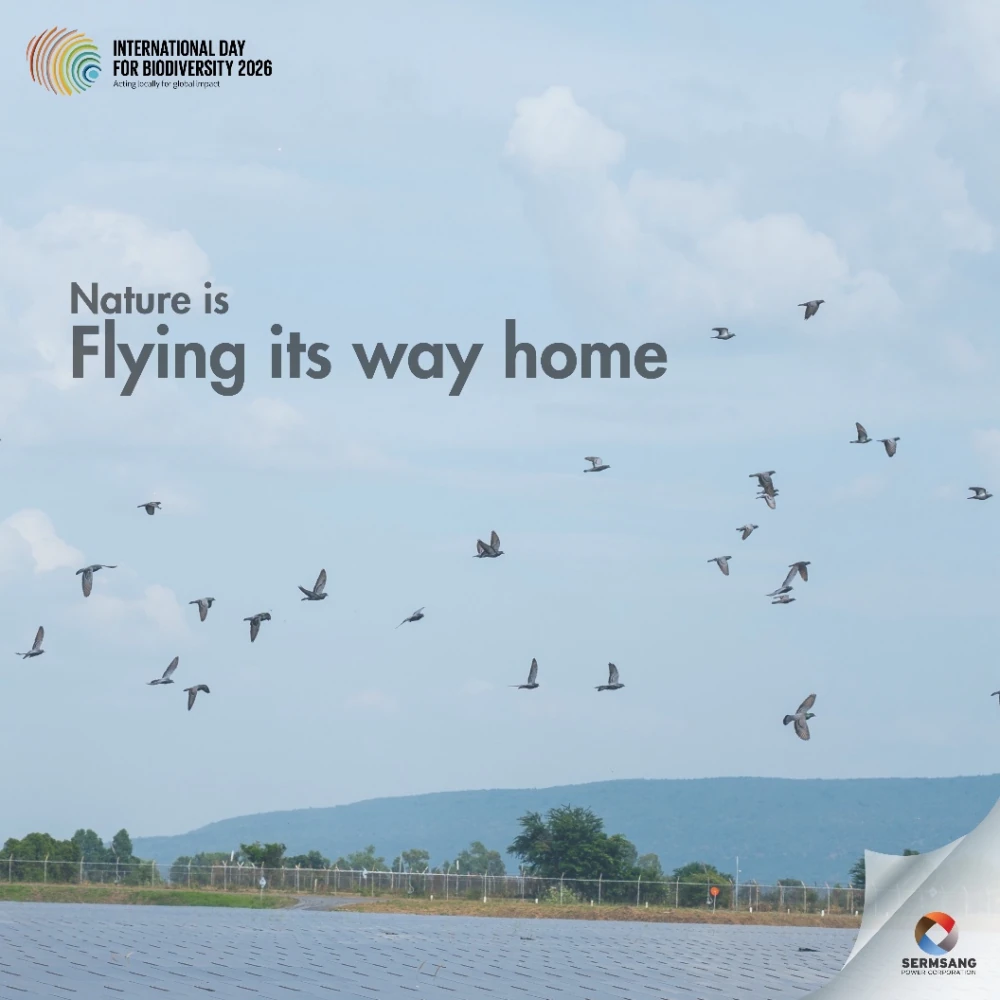
As the world faces a rapid crisis of nature loss, the International Day for Biological Diversity (IDB), observed annually on May 22nd, is more than just a date on the calendar. It serves as a "wake-up call" for humanity to recognize the critical importance of the ecosystems that form the foundation of all life on Earth.
History and Significance of the International Day for Biological Diversity
The United Nations established this day to raise awareness and promote sustainable solutions for nature conservation:
- Background: Originally set for December 29th (the date the Convention entered into force), the UN General Assembly later moved it to May 22nd in 2000. This date commemorates the official adoption of the Convention on Biological Diversity (CBD) in Nairobi in 1992.
- Significance in Three Dimensions: Biodiversity conservation focuses on maintaining richness across three mutually reinforcing dimensions:
- Genetic Diversity: The variation of genes within the same species, which enables adaptation and survival in changing environments.
- Species Diversity: The variety of plants, animals, and other organisms within a specific area.
- Ecosystem Diversity: The complexity of habitats and the interdependence of living organisms.
- Economic Value: Biodiversity represents "Natural Capital" that provides immense ecosystem services, such as air purification, water purification, and food production. Data indicates that healthy ecosystems are valued at approximately $179 trillion USD; thus, the loss of nature poses a severe risk to global economic stability.
Harnessing the Power of Our Hands for Global Impact
International Day for Biological Diversity 2026
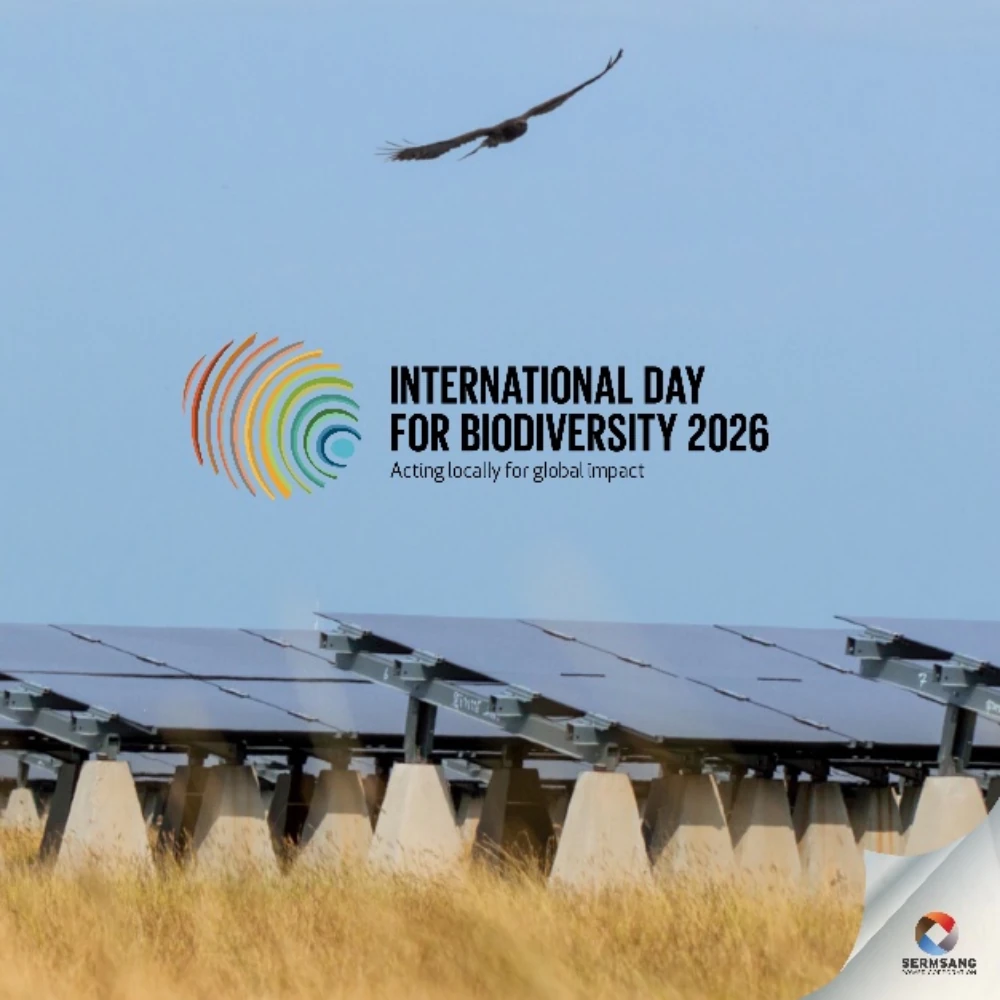
The theme for this year’s IDB is “Acting locally for global impact,” emphasizing that the small actions taken by our own hands can generate massive results for the world. This is reflected in our symbolic identity:
- Fingerprints: Represent the vital role that every individual and community can play.
- Lines: Symbolize local actions that ripple outward, signifying strong cooperation.
- Diverse Colors: Represent the 23 targets of the Kunming-Montreal Global Biodiversity Framework (KM GBF), which aims to become "Nature Positive" by 2030.
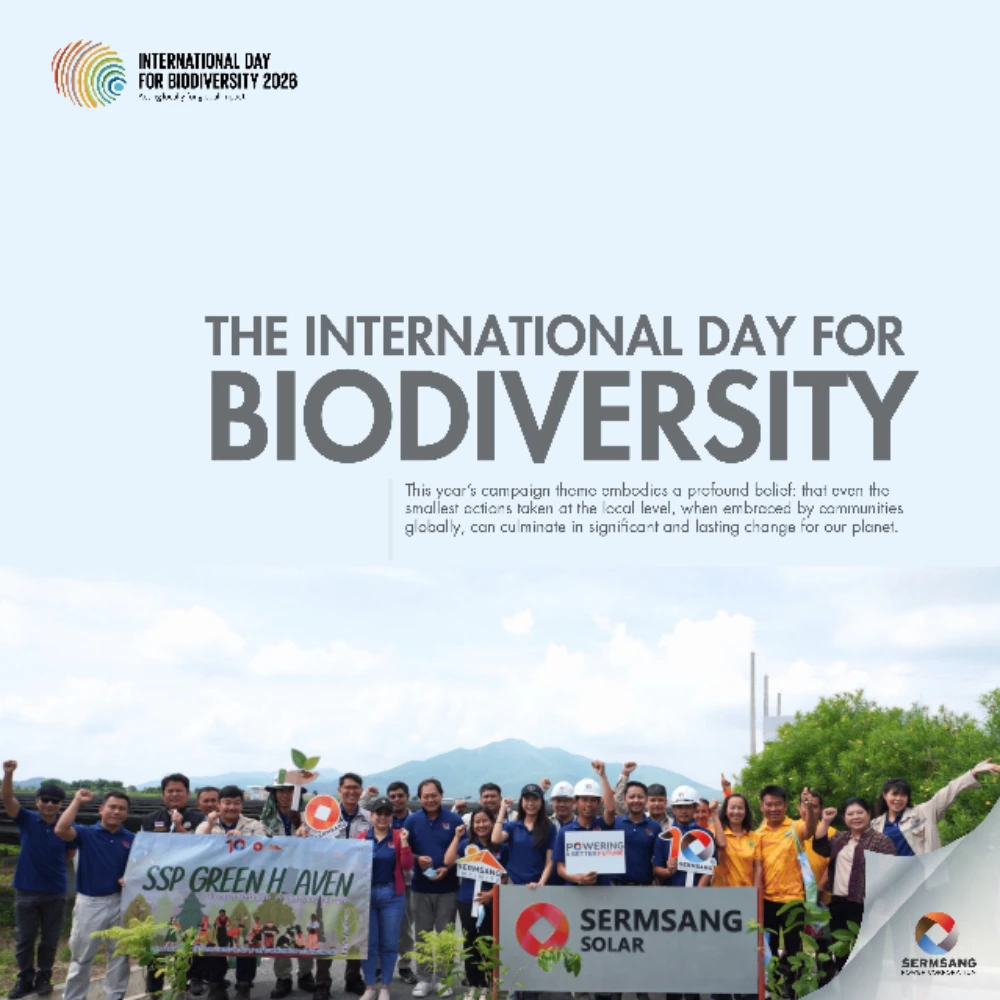
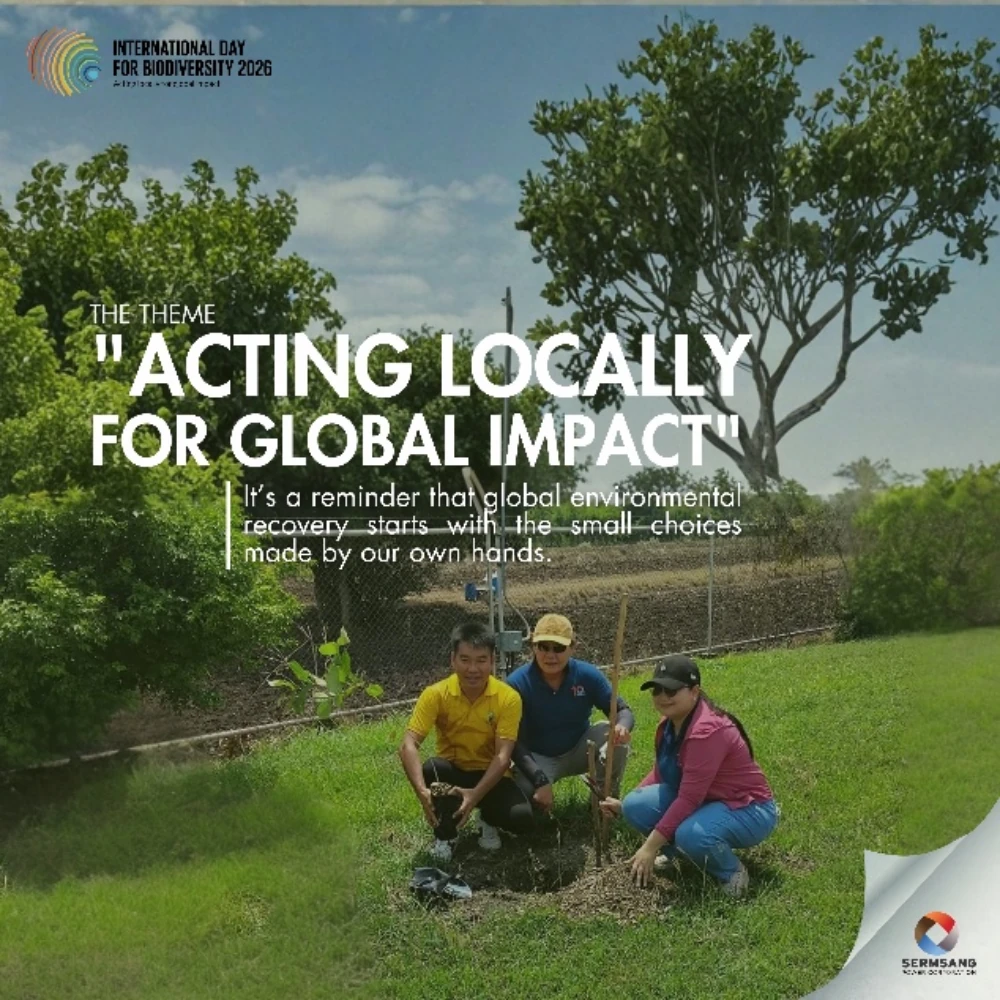
Strategy Toward Nature Positive: From "No Net Loss" to "Net Gain"
As a leader in renewable energy, SSP has evolved its approach from merely "reducing impacts" (No Net Loss) to creating a "net profit" for the world (Net Positive/Net Gain):
- No Net Loss: Maintaining a balance to ensure biodiversity does not decrease as a result of business operations.
- Net Gain / Net Positive: Proactively restoring nature to a state of greater abundance than existed before the project began, aiming to become truly Nature Positive.
Operational Practice: "SSP GREEN HAVEN" – Habitat Management
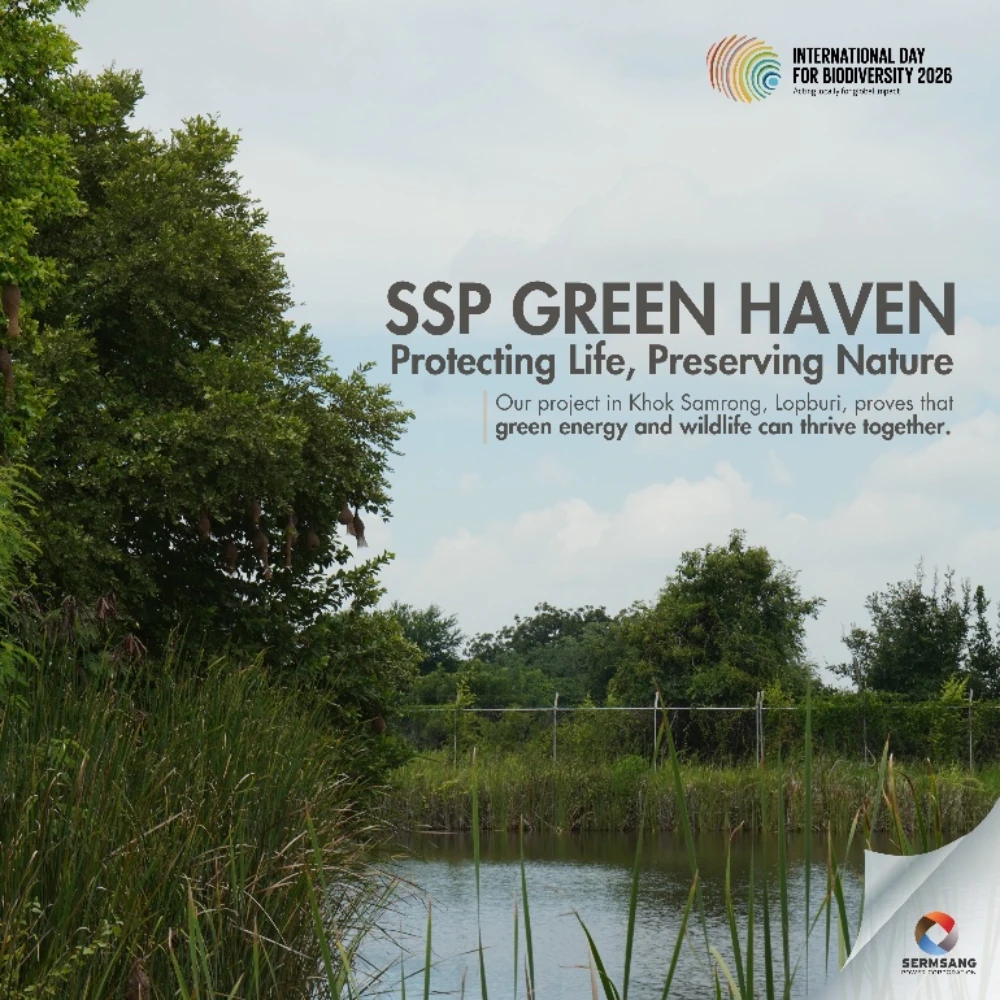
Our project in Khok Samrong, Lopburi, demonstrates our commitment to habitat conservation using the AR3T framework (Avoid, Reduce, Restore, Transform) to build ecosystem resilience:
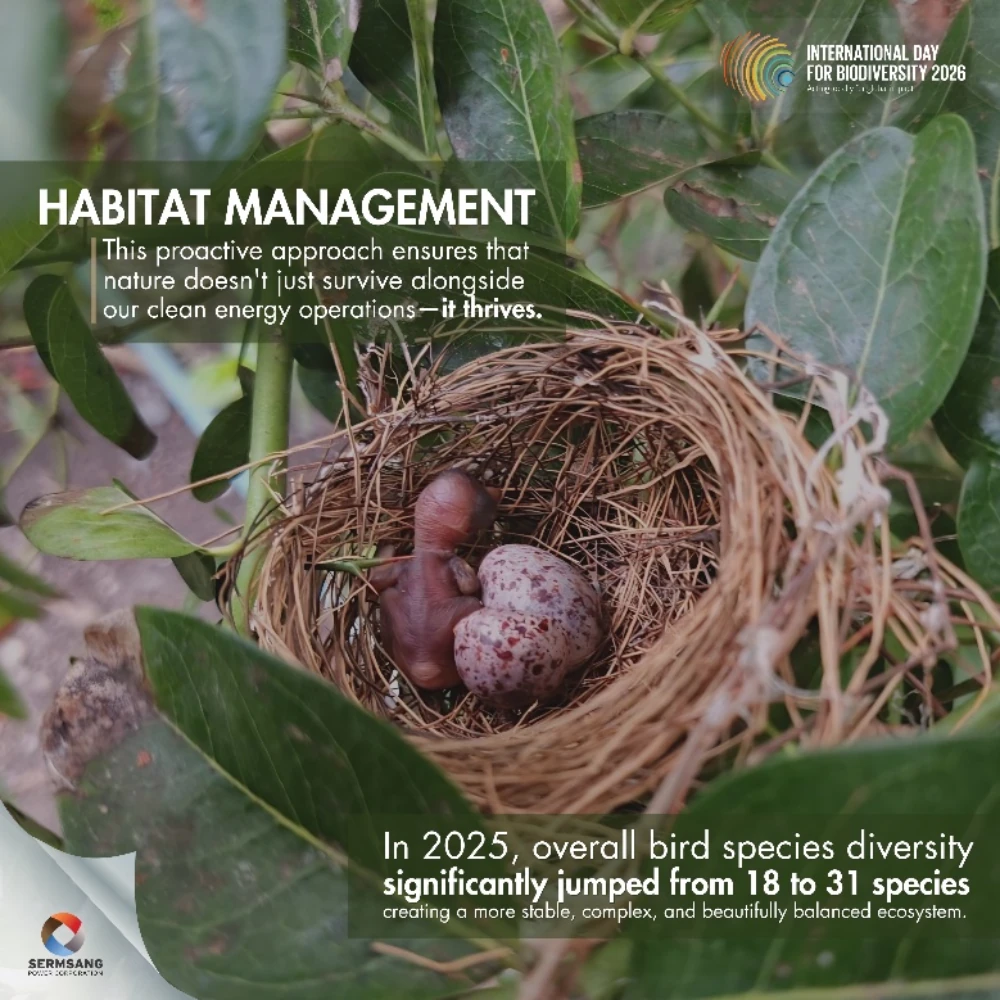
- Wetland Habitat: SSP maintains ponds and wetlands within the power plant as essential food sources and shelters for waterbirds. In 2025, new species were discovered, including whistling ducks and great cormorants, alongside migratory birds that use this area as a crucial stopover.
- Open Area Habitat: Areas under solar panels and surrounding open lands are managed as foraging grounds for open-field birds like red-wattled lapwings and pied bush chats, which help control insect populations in the area.
- Vegetation & Buffer Zone: We have thickened tree-lined fences to reduce Habitat Fragmentation and create Ecological Corridors. This has led to a 380% increase in the "Junglefowl" population, an indicator species, (from 10 in 2024 to 48 in 2025).
- Ecological Rebalancing: In 2025, bird species diversity significantly increased from 18 to 31 species (totaling 785 individuals). While populations of some species may have fluctuated, this reflects a new equilibrium as new species arrive to share foraging spaces, making the ecosystem more stable and complex.
Empowering Communities Through Shared Knowledge
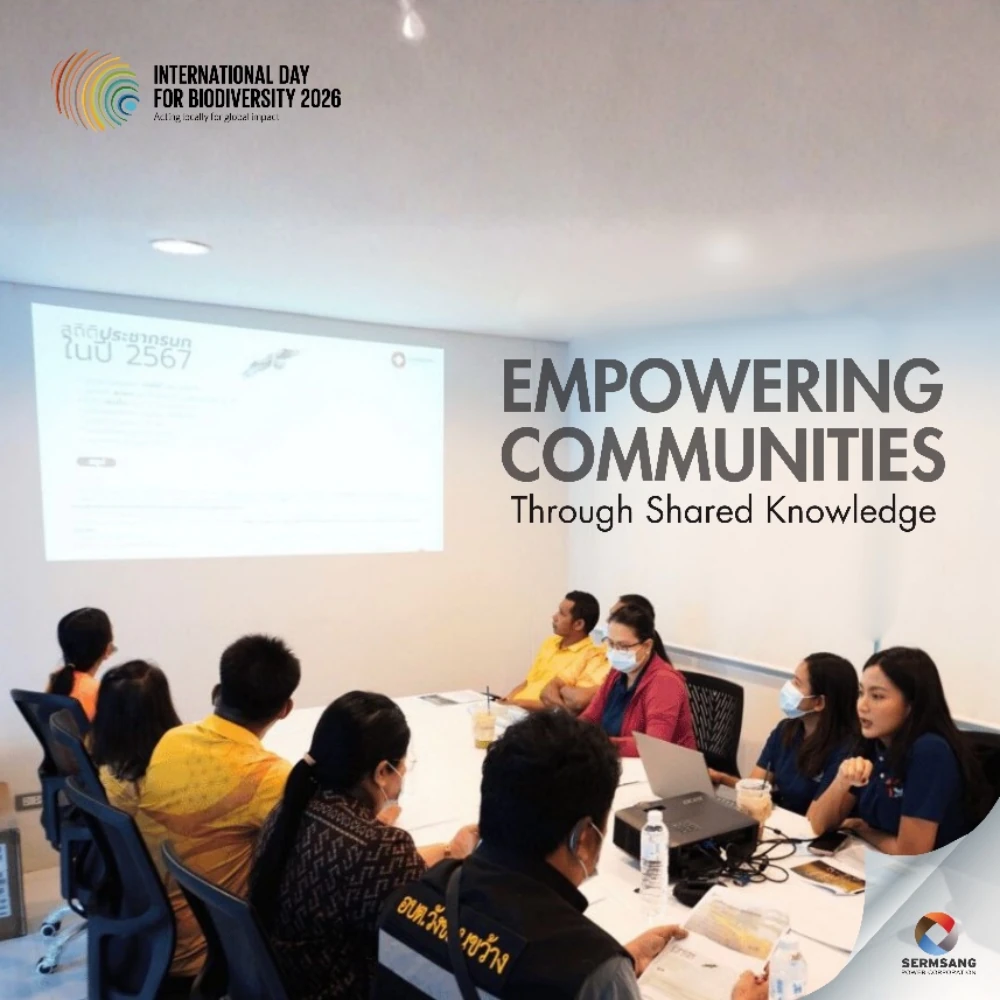
True sustainability expands far beyond the boundaries of our clean energy sites. SSP is deeply committed to raising environmental awareness by regularly educating and communicating with local communities regarding biodiversity. Each year, we share the inspiring results of our annual bird population surveys with the community. This ensures that local residents are actively engaged and understand how renewable energy and thriving ecosystems can beautifully coexist.
Acting locally for global impact Our operational journey at the Khok Samrong project in Lopburi proves that when we proactively restore habitats, "nature is flying its way home." SSP will continue to harness the power of local commitment to build a stronger, greener, and genuinely Nature Positive future.
Key Terms
- Nature Positive: A global goal to halt and reverse nature loss to ensure nature is recovering and better off than the 2020 baseline.
- Net Gain / Net Positive: The net positive biodiversity balance achieved through restoration after accounting for any negative impacts.
- No Net Loss: Ensuring no net reduction in nature due to project operations.
- AR3T Framework: A risk management process: Avoid, Reduce, Restore & Regenerate, and Transform.
- Bio-indicator: Living organisms used to assess the health of an ecosystem (e.g., the birds and junglefowl at SSP sites).
- Habitat Fragmentation: The process by which natural habitats are broken up; SSP addresses this by creating Buffer Zones to restore ecological connectivity.
- OECMs (Other Effective Area-based Conservation Measures): Areas outside protected forests that are under sustainable management by the private sector.
- Natural Capital: All natural resources that provide a flow of services beneficial to humans.
- Ecological Rebalancing: Restructuring biological populations to ensure long-term diversity and balance.
Article by: Neeranara Suklangkan
References
- Annual Biodiversity Report 2025, Sermsang Power Corporation Public Company Limited
- The AR3T Framework for Biodiversity Risk Management
- The ACT-D Approach and Accelerating Business Actions on Nature, by Business for Nature
- "The Significance of Biodiversity and National Implementation Mechanisms," by the Biodiversity Management Division, Office of Natural Resources and Environmental Policy and Planning (ONEP)