


Human Capital Development
Importance and Mission
The significance of empowering human capital for sustainable growth lies in the fact that the renewable energy sector is expanding rapidly. As the Group has experienced significant growth in recent years, attracting, retaining, and developing talent, which is a critical resource in this environment, has become a major business challenge. The Group recognizes that its people are the driving force behind stable and long-term growth in the renewable energy industry. Amid increasing competition and market expansion, attracting and retaining high-quality personnel is therefore a key priority. The Group is committed to managing human resources in accordance with international labor standards and adheres to the declarations and conventions of the International Labour Organization (ILO), including the elimination of forced labor, child labor, and human trafficking. The Group also complies with relevant laws and regulations such as the Labour Protection Act B.E. 2541 (1998) and its amendments, the Labour Relations Act B.E. 2518 (1975) and its amendments, and the Thai Labor Standard TLS 8001. In addition, the Group considers the expectations of stakeholders including employees, customers, financial partners, and local communities to create a decent, fair, and safe working environment for all.
SDGs in the Human Capital Development


Goals and Performance Highlights
Goals





Performance Highlights 2025

Employee retention rate

Employees receive fair performance evaluations

Average training hours
Hours

Employees complete training on the Business Code of Conduct and Human Rights Policy (ESG in DNA Program) %
The number of labor and human rights violation incidents related to employees
The Group’s Operational Approaches
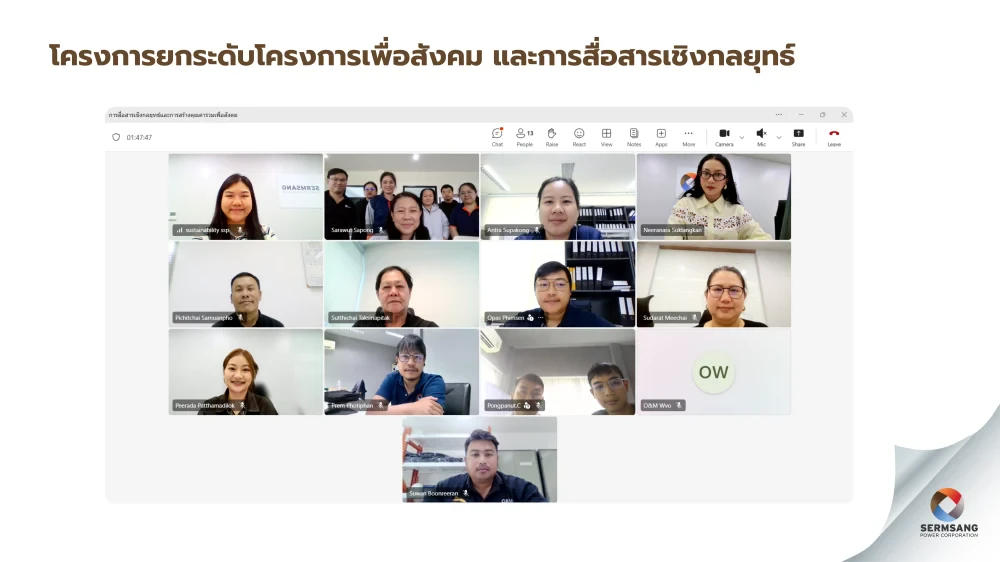
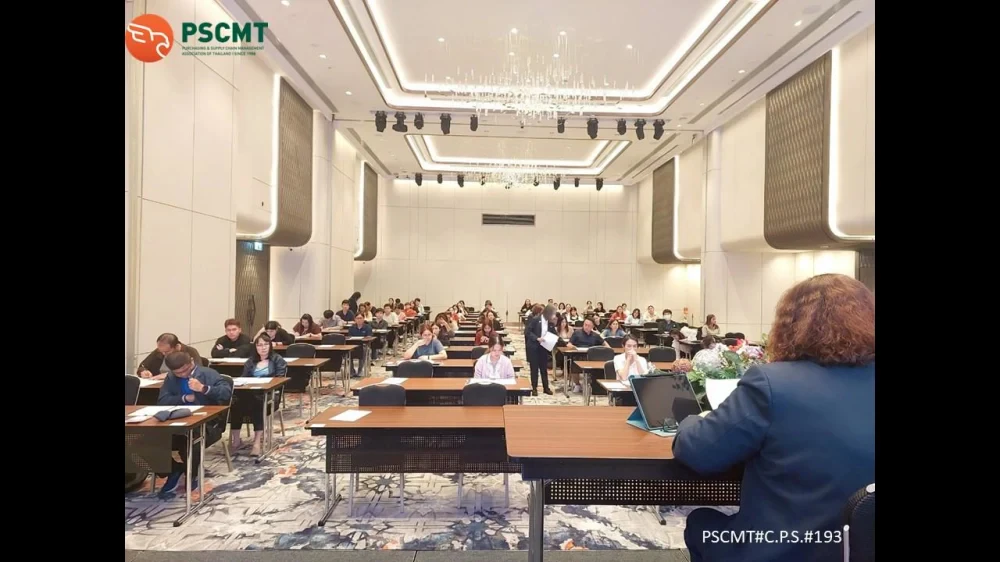
The Group, through the Human Resources Department, establishes personnel training plans to ensure that all employees receive the necessary skill and knowledge development required for their roles. Continuous capability enhancement is provided to prepare employees for change. The Group also reviews its training roadmap, which includes both soft skills and technical skills development, ensuring alignment with all employee levels and keeping pace with business transformation, particularly in technologies related to renewable energy, marketing, environment, accounting, and sustainability. This approach strengthens readiness across all functions. On-the-job training is also implemented to ensure employees understand work procedures, perform tasks correctly and safely, and reduce workplace accidents. Success indicators are defined for each relevant training topic.
On 12 November 2025, the Group approved, through a resolution of the Board of Directors, the review of the Human Resource Management Policy and the Human Rights Policy. These policies cover freedom of association and collective bargaining, respecting employees’ rights to form groups, establish welfare committees, or voluntarily join labor unions as representatives in discussions and negotiations on employment conditions. The policies also address the elimination of forced labor and child labor. The Group enforces strict measures prohibiting forced labor, modern slavery, and the employment of child labor below the statutory minimum age in all stages of business operations, including within the supply chain. The policies further emphasize equality and nondiscrimination, ensuring fair and equal treatment for all employees regardless of gender, race, religion, or disability. The Group promotes diversity and inclusion, creating opportunities for all groups, including underrepresented individuals. The Group also ensures fair wages and working hours by establishing a competitive compensation structure that exceeds the legal minimum wage to guarantee a living wage. Working hours and leave entitlements are strictly managed in accordance with labor laws
Succession Plan and Process
SSP group is committed to identifying and developing high-potential individuals to assume critical roles within the organization. This proactive approach ensures a seamless transition and continued success by preparing a pipeline of successors for key positions. We focus on roles vital to the company's achievements, such as TOP Management (C-Level), Vice President, and positions with direct business impact. By 2025, we have successors prepared for 90% of our critical roles, with a 2:1 successor-to-position ratio. This strategy ensures readiness for future transitions and maintains our operational stability.
The succession plan and process are divided into 2 main plans
-
Internal Succession Plan and Process (Internal Promotion / Stretch Assignment / Rotation / Transfer Process)
The approach to developing internal employees to create successors will focus on the following:
- Mentoring Program
- Coaching by Executives
- Stretch Projects / Cross-Functional Assignments
For C-Level positions, Job Shadowing will be integrated to enable aspiring executives to learn and cultivate leadership competencies in alignment with Executives as Role Models.
-
External Succession Plan and Process (External Recruitment Process)
In cases where the company is unable to recruit and develop internal personnel to fill critical organizational positions, the company will proceed with recruiting successors from outside the organization using the following methods:
- Experts / Consultants from external agencies or organizations (Professional Associations)
- Recruitment agencies (Diversity Agencies) to source candidates with expertise and qualifications suitable for the desired position.
Risk management and Mitigation plan
In the event that there is no successor for a Critical Role, the company has the following emergency contingency plans
- Interim Manager
- Consultant
- Retired personnel returning temporarily to assist

This table can be scrolled horizontally
| Position Level | Internal Promotion | Rotation/ Transfer | External Recruitment | Key Competency | Follow up & Evaluation | Person in Charge |
|---|---|---|---|---|---|---|
| C-Level |
|
|
Nomination and Remuneration Committee: NRC & HR | |||
| Vice President (VP) / Assistant-Vice President (AVP) |
|
C-level & HR | ||||
| Manager / Specialist |
|
VP & HR |