

Social
Hygiene and Clean Energy Development Project for Youth Commemorating National Labour Day 2026
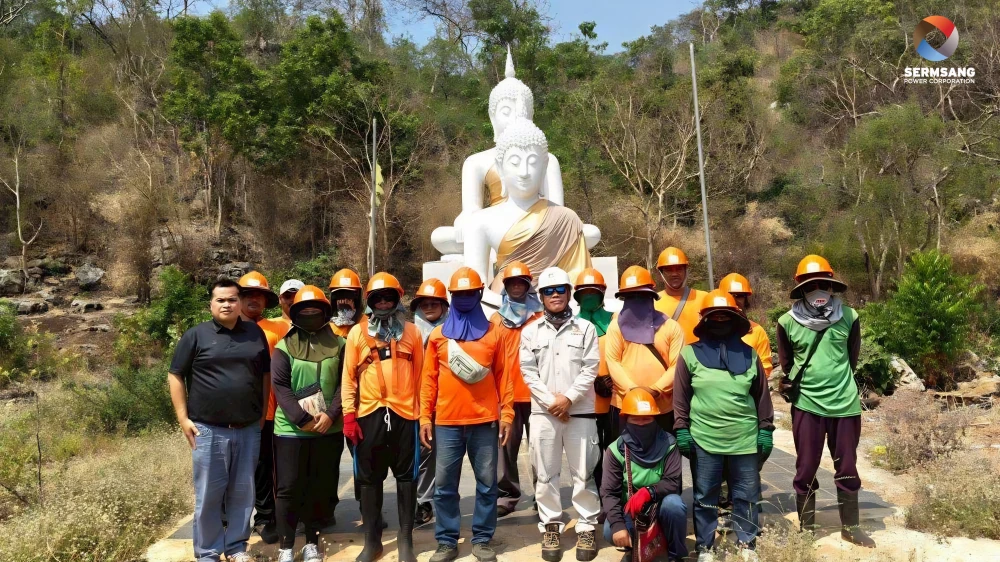
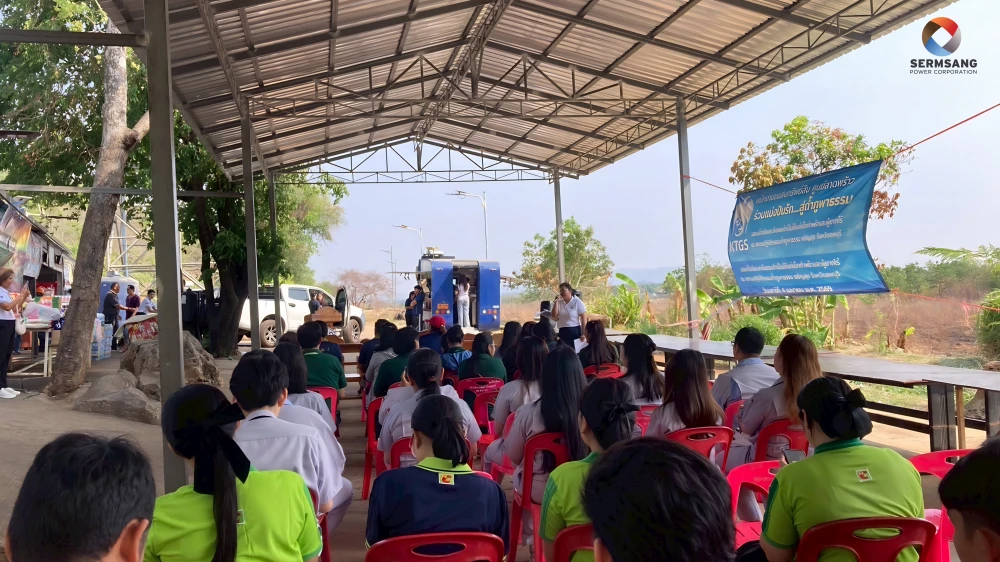
Sermsang Energy Co., Ltd., a subsidiary of Sermsang Power Corporation Public Company Limited (SSP), is committed to integrating Environmental, Social, and Governance (ESG) principles into its core operations. On the occasion of National Labour Day 2026, recognizing the importance of labor networks and surrounding communities, the Company collaborated with the Lopburi Provincial Office of Labour Welfare and Protection to organize a community service initiative.
Through coordination with government agencies, it was identified that the Tham Phu Pha Tham Charoen Suk Meditation Center in Nong Muang District, Lopburi, provides sanctuary and educational support for approximately 70 hill tribe students from Phop Phra District, Tak Province, ranging from kindergarten to bachelor's degree levels. However, certain communal areas had become dilapidated and overgrown, and the existing lighting and solar power systems lacked maintenance. This posed risks of accidents and hazards from venomous animals. Consequently, the Company initiated this volunteer project, leveraging employees' technical expertise and clean energy skills to renovate the premises for maximum safety and well-being.
Project Objectives
- To enhance safety and hygiene standards in recreational areas and restrooms for the 70 hill tribe students.
- To restore and optimize the efficiency of the meditation center’s 4,050-watt Solar PV system.
- To foster multi-stakeholder collaboration between the public sector (Lopburi Provincial Office of Labour Welfare and Protection) and 7 private sector entities to drive collective social benefits.
Stakeholders and Project Scope
- Timeline: April 28, 2026, and April 30, 2026 (2 days, 4 hours per day).
- Location: Tham Phu Pha Tham Charoen Suk Meditation Center, Lopburi Province.
-
Participants:
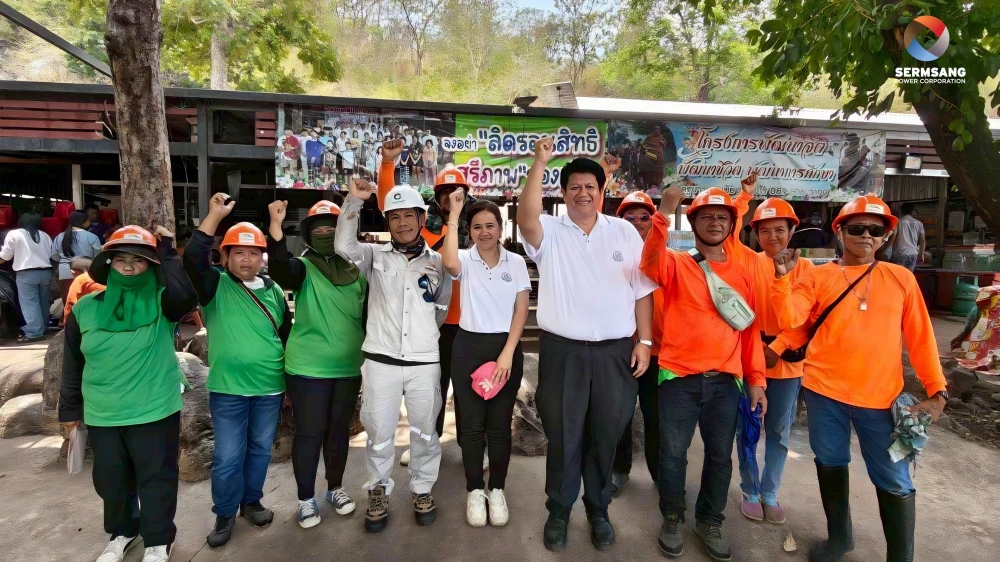
- Volunteer staff from Sermsang Infinite Co., Ltd.: 1 person.
- Partner staff from Pornpoonon Group Co., Ltd.: 15 persons.
- Total: 16 participants.
- Beneficiaries: 70 hill tribe students and resident monks/practitioners.
Operational Plan
Day 1: Landscape Improvement and Energy System Restoration (April 28, 2026)
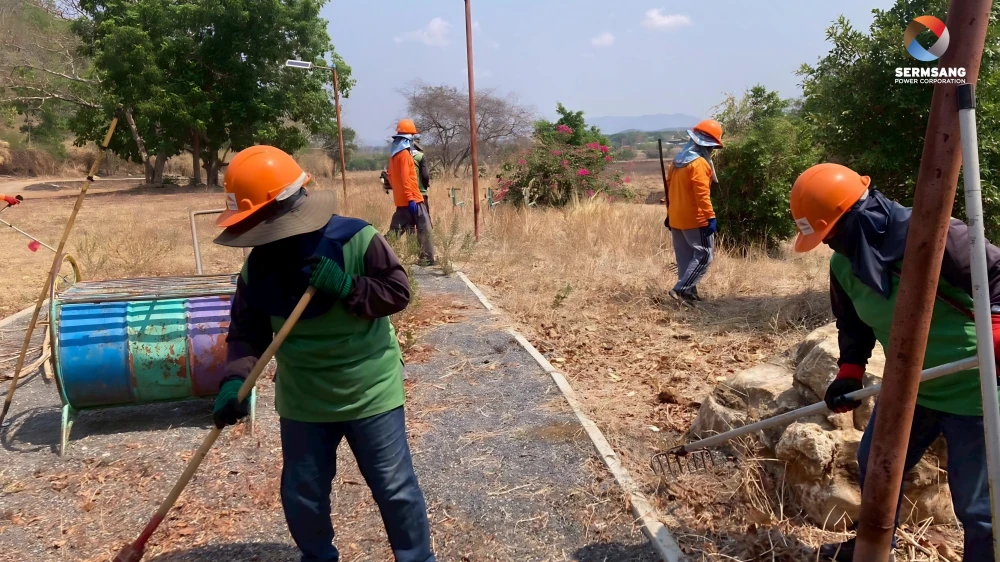
- Deployed 16 volunteers to clear overgrown vegetation and improve communal landscapes for safety.
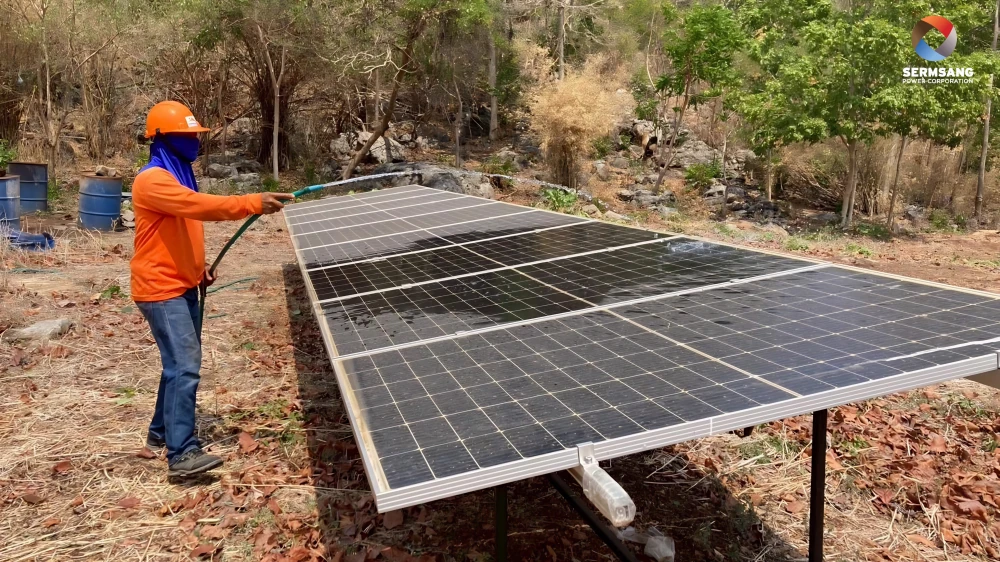
- Technical teams performed maintenance and cleaning of the 4,050-watt solar panels to remove dust (soiling) and enhance power generation efficiency.
Day 2: Safety Lighting Installation (April 30, 2026)
- Deployed 8 volunteers for continued site work.
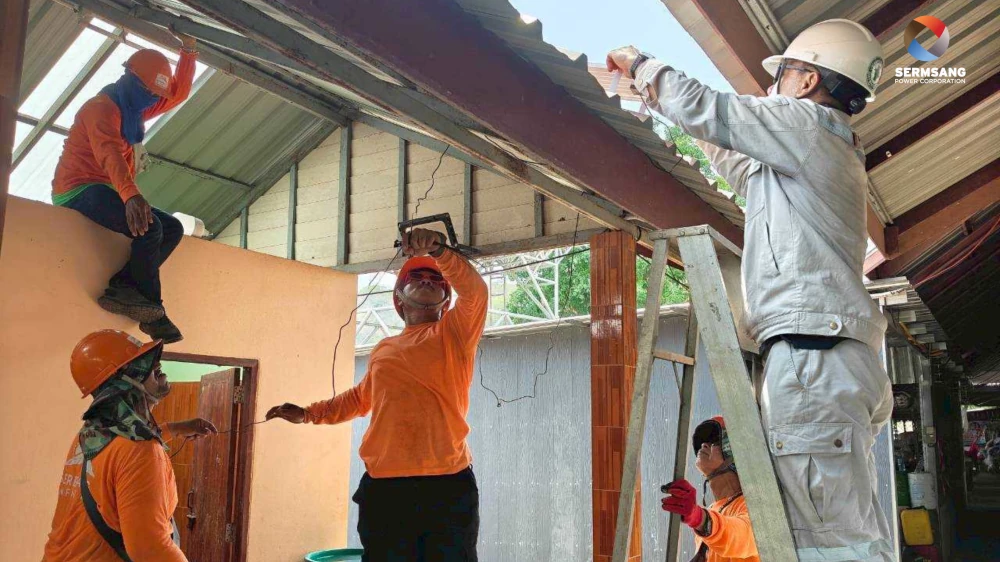
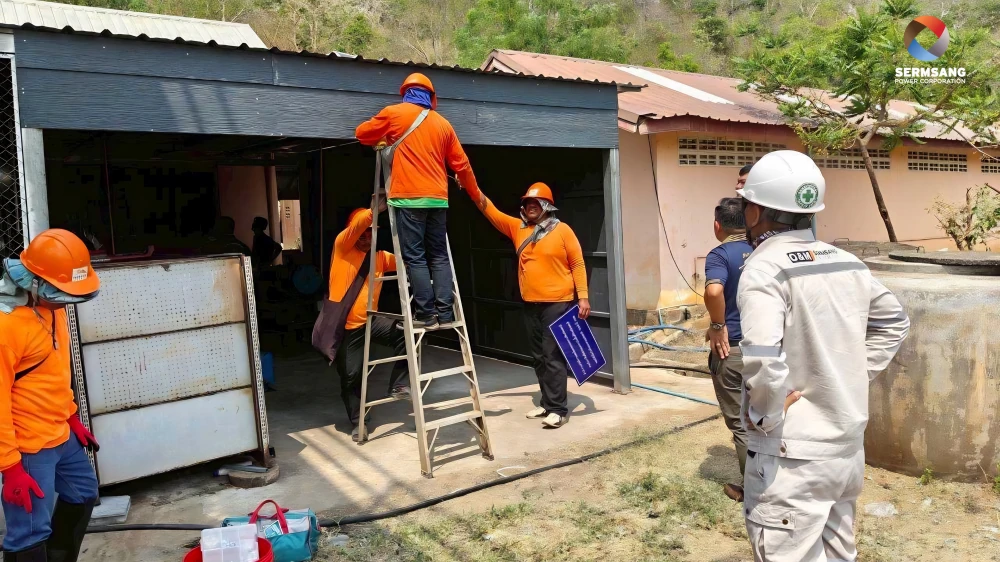
- Installed 8 sets of automatic solar-powered lighting systems (5 sets for female restrooms, 3 sets for male restrooms) to eliminate dark spots and improve nighttime security.
Social Value Chain Analysis
- Inputs:
- Human Capital & Time: Volunteer labor over 2 days (Day 1: 16 pax, Day 2: 8 pax).
- Operational Capital: Fuel equipment and technical tools.
- Activities: Landscape clearing, solar panel maintenance, and installation of 8 solar lighting units.
- Outputs: Cleaned premises, fully functional solar panels, and 8 automated light points in restroom areas.
- Users: 70 hill tribe students (primary target) and the meditation center administration.
- Outcomes:
- Awareness: Beneficiaries recognize the improved hygiene and safety of the environment.
- Acceptance: Increased confidence in site safety following the removal of hazards and venomous animal habitats.
- Transformation: Reduced anxiety regarding nighttime hazards, replaced by a sense of security and well-being.
- Sustainability: Restored solar efficiency fosters clean energy awareness and resource discipline among the youth.
- Financial Stability: Reduced electricity costs allow the center to reallocate funds toward food and educational scholarships.
- Impacts: 70 students are protected from accidents/hazards; the environment actively supports long-term health and education.
Theory of Change (ToC) Assessment
- Energy Pathway: IF technical volunteers restore the solar system, THEN power output increases, LEADING TO reduced utility costs and increased budget for student welfare.
- Well-being Pathway: IF volunteers clear the landscape and install solar lights, THEN dark spots and hazards are eliminated, LEADING TO enhanced safety and mental well-being for the 70 students.
- Social Capital Pathway: IF the private sector collaborates with government labor offices, THEN resources are integrated and public spirit is fostered, LEADING TO strengthened social capital and sustainable trust between the community and the business.
SROI Evaluation (Social Return on Investment)
1. Establishing Costs (Total Input)
- Volunteer Labor Cost: (Avg. wage 47 THB/hour x 4 hours/day)
- April 28 (16 pax): 3,008 THB
- April 30 (8 pax): 1,504 THB
- Fuel Costs: 421 THB
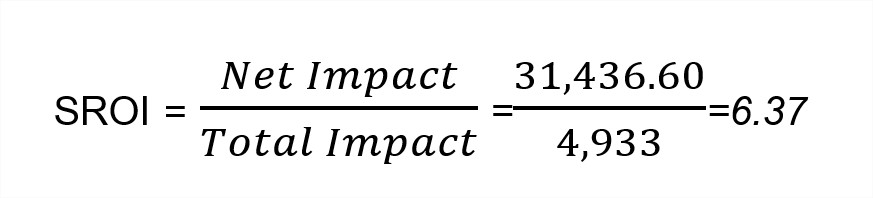
- Total Investment (Total Input) = 4,933 THB
2. Establishing Financial Proxies (Gross Impact)
- Solar Restoration Value: Calculated from 25% recovery of "Soiling Loss" for a 4.05 kWp system = 493.59 THB/cycle.
- Physical Service Outsourcing Proxy: 10,250 THB.
- Youth Safety & Well-being Proxy (70 pax): 30,350 THB/year.
- Gross Impact = 41,093.59 THB
3. Establishing the Baseline (Net Impact Calculation)
To determine the Net Impact, the following parameters were applied:
- Deadweight (10%): Accounting for routine cleaning that might occur regardless of the project (-4,109.36 THB).
- Attribution (15%): Sharing credit with the 7 partner agencies and the site owner (-5,547.63 THB).
- Net Impact = 31,436.60 THB
Establishing the Discount Rate
Given that this project is a short-term volunteer initiative with a one-year duration, a Discount Rate has not been applied to calculate future value projections. The cumulative social value is recognized entirely within the base year.
SROI Ratio
Value Creation Summary
The project achieved a Net SROI Ratio of 1:6.37. This indicates that for every 1 THB invested by the Company, a social return of 6.37 THB was generated, encompassing community well-being, hygiene, and safety enhancements.
References
- Standard Reference Prices for Cleaning and Landscaping Services: Derived from the Comptroller General’s Department, Ministry of Finance, via the Government Electronic Procurement (e-GP) system. (Used as a Market Proxy for physical service contract values within Lopburi Province).
- Social Well-being and Safety Financial Proxies Database: Provided by Social Value Thailand Association. (Utilizing the Willingness to Pay (WTP) methodology to evaluate the perceived value of reducing risks associated with physical injury and hazardous environments).
- Pongsak Tamkaew, et al.: "Estimation of Soiling on Solar Panels using Image Processing," 1st National Conference on Engineering Research.
Methodological Framework
- Social Impact Assessment (SIA) and Social Return on Investment (SROI) Manual: Developed by the Puey Ungphakorn School of Development Studies, Thammasat University, in collaboration with the Program Management Unit on Area Based Development (PMUA) and the Thailand Science Research and Innovation (TSRI) via pmua.or.th.
Note: This framework serves as the primary standard for classifying Inputs, Outputs, and Outcomes. It also provides the rigorous criteria for adjusting Deadweight (outcomes that would have happened anyway) and ensuring a fair Attribution of value among all project stakeholders.
Gallery