

Social
SPN Drop for Life Project
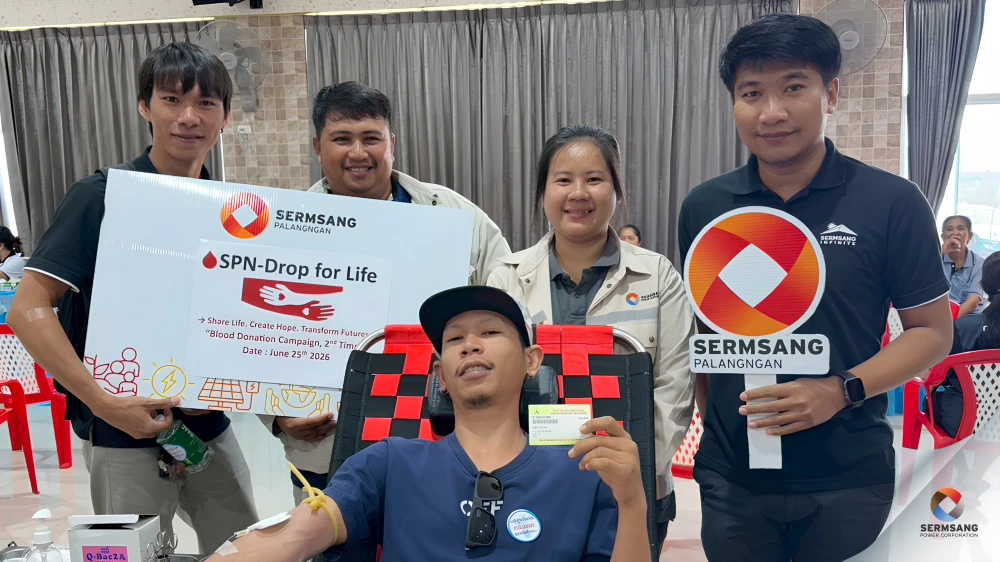
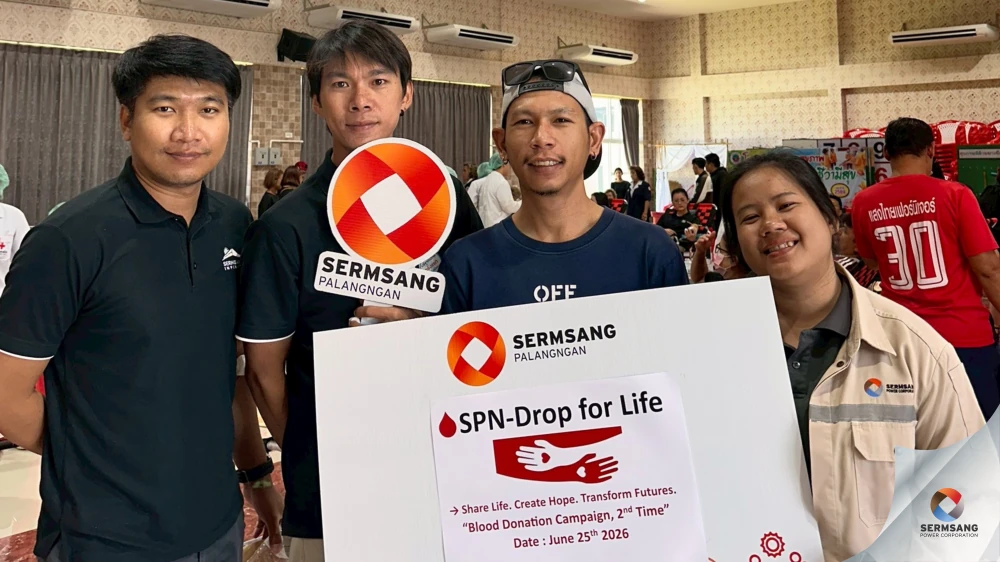
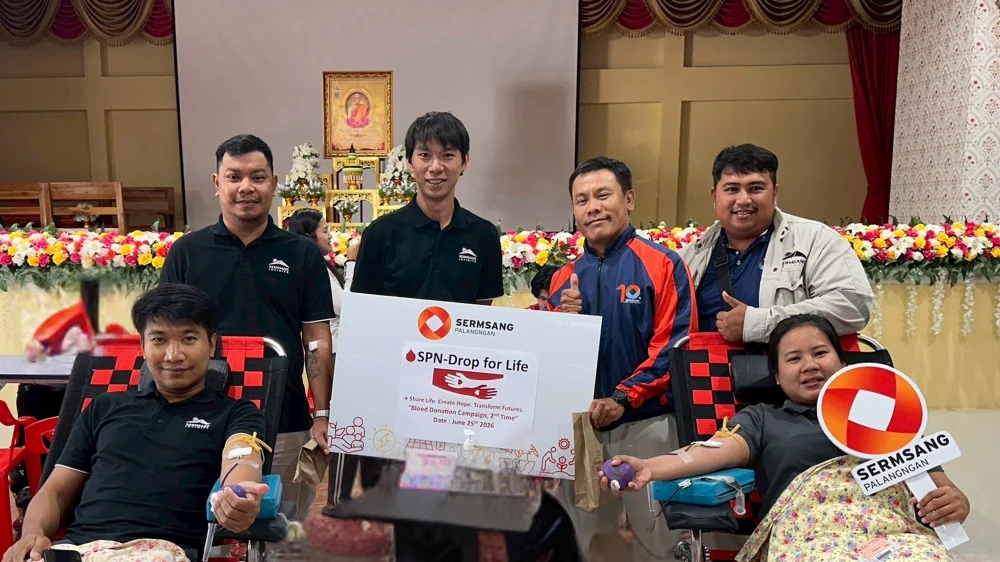
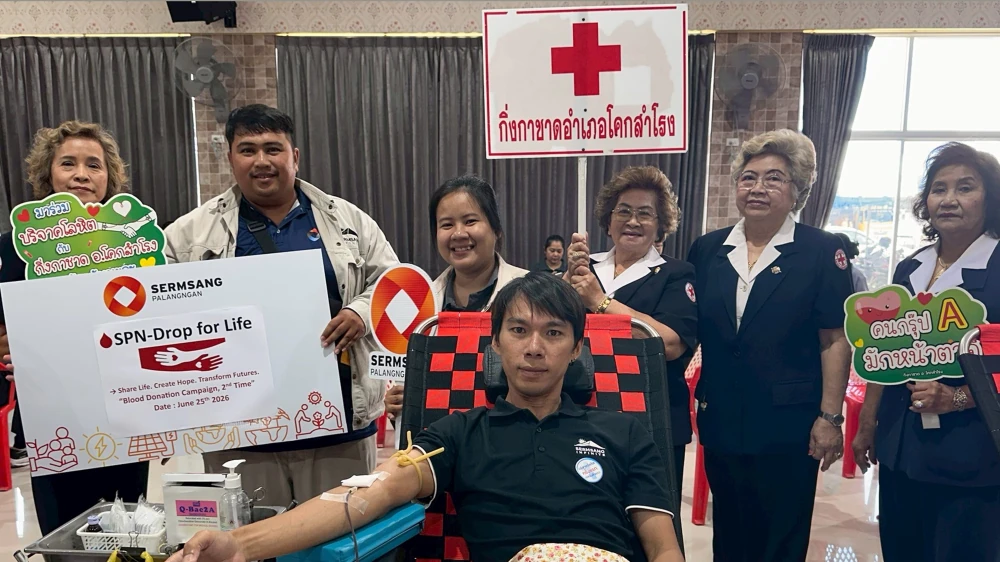
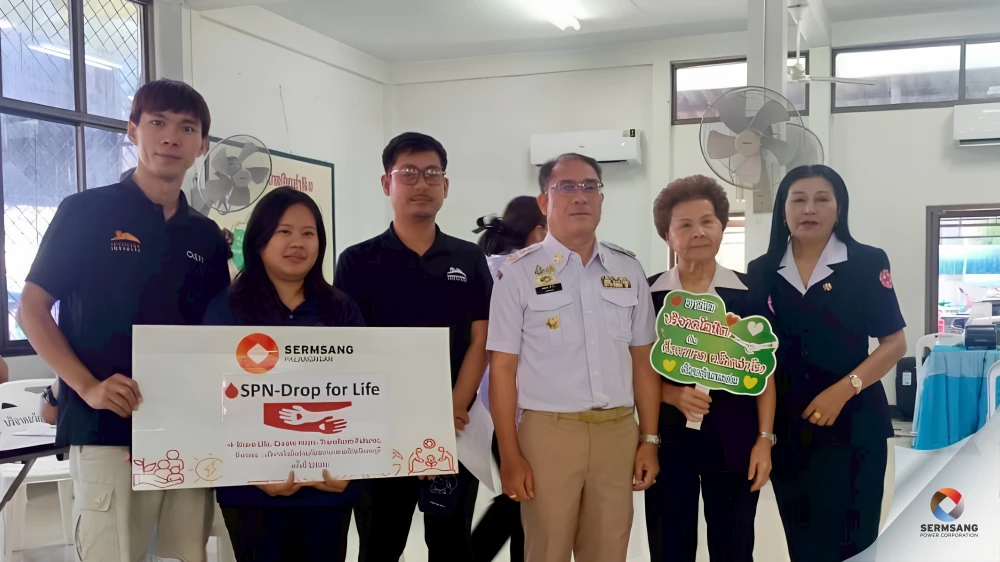
Sermsang Palangngan Co., Ltd., a subsidiary of Sermsang Power Corporation Public Company Limited (SSP), is firmly committed to conducting its business alongside Environmental, Social, and Governance (ESG) responsibilities. On elevating community welfare and well-being initiatives for the year 2026, the Company recognized the significance of labor networks, surrounding communities, and public health security. Consequently, the Company collaborated with the Khok Samrong District Red Cross Branch in Lopburi Province to organize a public service activity.
Through coordination with the government sector and mobile outreach units, it was found that the Khok Samrong District area in Lopburi Province still experiences a high demand for blood supply to assist critical patients, accident victims and patients with blood disorders across various medical facilities. Safe and standardized blood reserves remain scarce during certain periods. Furthermore, traditional industrial blood procurement processes often generate negative impacts and synthetic medical waste. Therefore, the Company established this volunteer project to leverage knowledge in safety, occupational health, and the power of employee unity to drive blood donations, thereby creating maximum health and well-being for the community.
Project Objectives
- To procure and deliver safe blood reserves, accumulating a total volume in the first half of the year for hospitals and blood banks in Lopburi Province.
- To cultivate a mindset of giving, develop preventive healthcare behaviors, and raise hygiene awareness among volunteer employees.
- To integrate collaboration between the private sector and public health agencies (Khok Samrong District Red Cross Branch) in driving a sustainable health ecosystem together.
Stakeholders and Project Scope
- Implementation Period: First-half evaluation covering 2 main operational days March 16, 2026 (1st iteration) and June 25, 2026 (2nd iteration), with volunteer employees working 4 hours per iteration.
- Location: Mobile blood donation service units at the Khok Samrong District Office and the Khok Samrong Subdistrict Administrative Organization (SAO) in Lopburi Province.
- Participants: A total of 9 volunteer employees from the Safety Unit (Safety Officers) and the O&M operations team (3 participants for the 1st iteration and 6 participants for the 2nd iteration).
- Beneficiaries: Emergency patients and patients requiring blood transfusions in the Lopburi Province area, as well as volunteer employees whose well-being is promoted.
Operational Plan
- 1st Iteration: Blood Procurement and Early-Year Life Stockpile Establishment (March 16, 2026)
- Deployed 3 volunteer employees and coordination staff to support and participate in blood donation at the Khok Samrong District Office mobile unit, operating for 4 hours.
- Collected and delivered 1,200 cc of blood into the central blood bank system.
- 2nd Iteration: Expanding Collaboration Networks and Elevating Blood Reserve Volumes (June 25, 2026)
- Increased volunteer manpower to 6 employees for continuous operation and donation at the Khok Samrong SAO, operating for 4 hours.
- Collected and delivered blood to support the Red Cross Branch, increasing the volume by 100% to 2,400 cc, while collecting evaluation forms and venue feedback for future improvements.
Social Impact Value Chain Analysis
Inputs:
- Human Capital and Time: Volunteer employees operated across 2 iterations, 4 hours per iteration (3 people in the first; 6 people in the second), totaling 36 working hours.
- Financial Capital: Actual monetary spend equaled 0 Baht (as medical equipment and blood donation beds were supported by the local Red Cross Branch).
Activities:
- Proactive establishment of mobile blood donation units, screening for blood concentration and vital signs, and executing safe blood collection processes in accordance with occupational health standards.
Outputs:
- A cumulative total of 3,600 cc of safe blood successfully collected in the first half of the year (equivalent to 9 standard bags of 400 cc each) and feedback data from participants to increase the number of donation beds in the future.
Users:
- Lopburi Province Hospitals and Blood Banks: Recipients of the blood supply managed and distributed to medical facilities.
- Volunteer Employees and the Community: Users of the preventive health screening and check-up services provided by the mobile unit.
Outcomes:
- Intangible Transformation Process: Users → Acceptance → Application leading to change.
- Volunteer employees gained awareness of the importance of giving and understood the blood demand situation in the communities surrounding the project site.
- Employees and the community accepted and trusted the health screening system, leading to behavioral shifts toward practicing self-care, maintaining body weight, and controlling diet to prepare for continuous blood donations every 3 months.
- Anxiety and risks associated with critical blood shortages in local medical facilities were reduced; physicians and nurses gained peace of mind in planning emergency patient treatments.
- The public health system in the Lopburi area gained stability and reduced the cost burden of procuring or ordering expensive synthetic blood, allowing hospitals to efficiently allocate budgets to support other medical equipment and public healthcare services.
Impacts:
- Emergency patients and blood disorder patients in Lopburi Province are safe and receive timely life-saving care. The public health environment surrounding the project site supports long-term health and medical security.
Evaluation via Theory of Change (ToC)
An analysis of social development value transmission using the logic of "If... then... leading to..." to answer what value the project delivers to society:
- Pathway 1 (Public Health):
- If the volunteer team donates blood, then a cumulative total of 3,600 cc of safe blood will be delivered into the blood bank system, leading to the immediate saving of up to 27 lives of critical patients in Lopburi Province, tangibly reducing mortality rates from accidents.
- Pathway 2 (Social Capital):
- If the Company continuously partners with the Khok Samrong District Red Cross Branch to develop community health, then it will elevate preventive health awareness and unity among the workforce, leading to robust social capital, solidarity, and sustainable trust among the community, government agencies, and the business enterprise.
Social Return on Investment (SROI) Evaluation
Establishing Costs (Total Input)
Calculated from the actual resources and operational time of volunteer employees at 4 hours per iteration:
- Volunteer Employee Labor Cost: (Based on an average wage rate of 44.5 Baht/hour, operating 4 hours per day)
- 1st Iteration on Mar 16, 2026: (3 employees × 4 hours × 44.5 Baht) = 534 Baht
- 2nd Iteration on Jun 25, 2026: (6 employees × 4 hours × 44.5 Baht) = 1,068 Baht
- Cash Budget: Equal to 0 Baht
- Total Investment Value (Total Input) = 1,602 Baht
Establishing Financial Proxies
Converting qualitative outcomes and social value into monetary terms, referenced from medical and social baseline data sources:
- Financial Proxy for Safe Blood Procured (9 Standard Bags): Cumulative volume for the first half of the year: 3,600 cc | Bag size of 400 cc equals 9 bags | Referencing the cost of procurement, infectious disease screening, and the temperature-controlled logistics system of the mobile blood bank, valued at 2,200 Baht per bag.
- Total Financial Proxy Value of Blood: 9 bags × 2,200 Baht = 19,800 Baht
- Financial Proxy for Reducing Physical Burden and Blood Bank System Services: 4,200 Baht
- Financial Proxy for Well-being, Peace of Mind, and Patient Life Safety: 4,500 Baht
- Gross Impact (Before Deductions) = 28,500 Baht
Establishing the Baseline
To determine the true impact generated by the project (Net Impact) according to standard social evaluation criteria, the following parameters are deducted:
- Deadweight: 10% (Some donors might have normally traveled to donate blood at the provincial center hospital on their regular cycles anyway).
- Deduction Calculation: 28,500 × 10% = 2,850 Baht
- Remaining after Deadweight: 25,650 Baht
- Attribution: 15% (Due to sharing value and credit with the District Red Cross Branch, which partnered to support medical personnel and blood collection equipment).
- Deduction Calculation: 25,650 × 15% = 3,847.50 Baht
- Remaining after Attribution: 21,802.50 Baht
- Net Impact from the Project = 21,802.50 Baht
Establishing the Discount Rate
Since the "SPN Drop for Life" blood donation project is a short-term, year-by-year volunteer activity, and all cumulative blood received (3,600 cc) was immediately distributed to save patient lives in medical facilities without year-over-year storage, no discount rate was applied to calculate future multi-year forecasts. The cumulative net value rests immediately within the current base year.
SROI Conversion

- Cost-Effectiveness Summary: When adjusted for the volunteer hours of 4 hours per iteration, this project results in a Net SROI ratio of 1 : 13.61. This means that for every 1 Baht the Company invested (in the form of volunteer employee time and labor), it could generate 13.61 Baht in social, health, and safety return value back to the community and the public health system in the Khok Samrong District area, reflecting the highest efficiency in short-term human resource utilization.
References
- National Blood Service Cost and Baseline Criteria: National Blood Centre, Thai Red Cross Society (Used as a base to benchmark the value of procurement, screening, and blood bag temperature control systems to find the local Market Proxy). URL: https://thaibloodcentre.redcross.or.th/wp-content/uploads/2025/03/Contract-Review-NBC-RBC-ปี-2568_-accept.pdf
- Financial Proxies Database for Public Health and Safety: Social Value Thailand Association (Utilizing willingness-to-pay research methodologies to evaluate the value of reducing critical health risks and mortality). URL: https://socialvaluethailand.org
- Lopburi Province Minimum Wage Rate 2026: Notification of the Wage Committee, Ministry of Labour (Used as a reference base to calculate labor and time costs of volunteer employees in the actual operation area, broken down hourly). URL: https://www.mol.go.th/อัตราค่าจ้างขั้นต่ำ
Methodological Framework: Social Impact Assessment (SIA) and Social Return on Investment (SROI) Manual by the Puey Ungphakorn School of Development Studies, Thammasat University (Used as the standard to classify Inputs, Outputs, Outcomes, Deadweight deduction rules, and fair Attribution allocation). URL: https://sroi-puey.my.canva.site/
Gallery