

Social
Enhancing Electrical Safety through DC Cable Routing Improvement
The Company places importance on occupational health and safety (OHS) management, focusing on hazard identification, risk assessment, and the implementation of preventive and control measures, alongside the continuous improvement of working conditions to ensure the safety of employees and personnel working at its power plants.
In 2026, WVO Solar Power Plant in Ratchaburi Province implemented a DC cable routing improvement project following incidents involving abrasion, insulation damage, and breakage of DC cables installed in underground conduits. Potential contributing factors included friction, compression, water and moisture, and foreign objects within the conduits. These conditions may pose electrical safety risks, including insulation faults, ground faults, and DC arcing, and may also affect the continuity of power generation.
The Company therefore initiated the improvement of DC cable routing by implementing engineering controls to mitigate electrical hazards, prevent recurring incidents, and improve accessibility and safety during inspection and maintenance activities.
Project Implementation
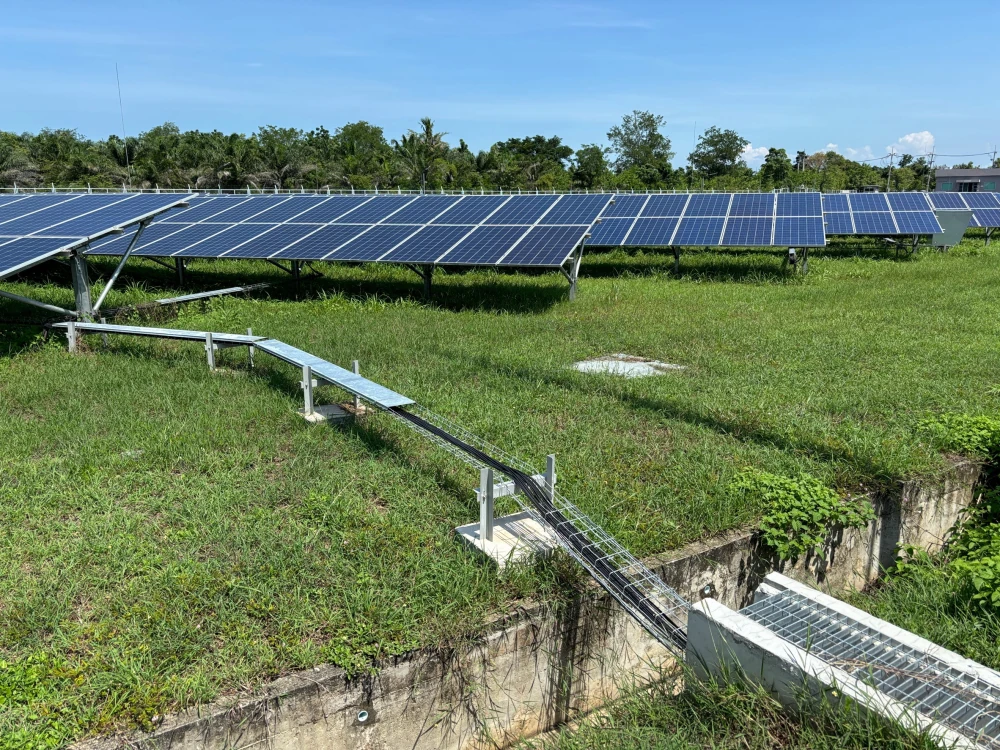
The Company relocated the DC cables from underground conduits to an above-ground routing system at a height of 40 centimeters. Cable trays and supporting structures were installed to improve cable organization and protect the cables from potential physical damage.
Following installation, cable condition inspections, polarity checks, and insulation resistance tests were incorporated into the inspection process to assess system readiness and support effective electrical safety risk management.
Project Results
The improved DC cable routing system enables employees to access and inspect cables more easily, reduces the limitations associated with underground cable inspections, and supports the early detection of abnormalities before they develop into more serious failures. The project provides benefits in three key areas:
- Occupational Health and Safety: Reduces the risks of cable insulation damage and electrical faults while mitigating occupational health and safety risks during inspection and maintenance activities.
- Operational Efficiency: Improves accessibility for visual inspections, fault identification, cable repairs, and replacement.
- Power Generation Reliability: Minimizes the risk of system downtime and energy losses associated with DC cable damage.
In addition to enhancing occupational health and safety, the project helps mitigate the risk of cable damage, reduce repair and maintenance requirements, and minimize potential energy losses resulting from system failures. The project is expected to generate annual cost savings of approximately THB 22,800 from avoided damage and energy losses, reflecting the Company's commitment to enhancing workplace safety alongside long-term operational efficiency.
Future Direction
The Company is committed to continuously monitoring and assessing electrical safety risks by utilizing inspection and maintenance data to evaluate the effectiveness of risk control measures. Similar improvements will also be considered for other operational areas, where appropriate, to prevent recurring incidents and continuously improve occupational health and safety performance.