

Environmental
Social
17 September 2026
WORLD OZONE DAY: Listen to the Whisper of the Ozone Layer and Take a "Green Step" with the Sermsang Family
The world once believed that the lesson of the 1980s concluded in total victory when nations united to heal the wounds in the stratosphere through the Montreal Protocol. In reality, the chemicals once hailed as saviors—hydrofluorocarbons (HFCs)—have emerged as silent adversaries on a new battleground. While they spare the ozone shield, their capacity to trap heat is hundreds to thousands of times greater than that of carbon dioxide (CO2).
The year 2026 marks the decennial milestone of the Kigali Amendment under the global theme: "Global action for a cooler planet – Celebrating 10 years of sustainable cooling under the Kigali Amendment." Phasing down HFCs by more than 80% over three decades is not merely a statistical target; it is a critical safeguard to keep global temperatures from breaching the catastrophic 0.5°C threshold.
Ozone Fact 01 | HFCs: From Ozone Protectors to Potent Climate Drivers
HFCs were synthesized to replace legacy CFCs and HCFCs. Lacking chlorine, their Ozone Depletion Potential is zero ("ODP"=0), successfully halting the expansion of the ozone hole. However, these compounds are classified as super-greenhouse gases, capable of trapping atmospheric heat at rates hundreds to thousands of times higher than carbon dioxide. Restricting their consumption and transitioning toward low-carbon refrigerants represents an urgent global imperative.
From Equations on Paper to Tangible Breath
For Sermsang Power Corporation Public Company Limited (SSP), sustainability extends beyond clean power generation to inform every facet of internal corporate operations:
- Scope 1 — Overhauling the Core Cooling Infrastructure: Transitioning refrigerants from R-410A (GWP100=2,088) to R-32 (GWP100=675) delivers an immediate 64.80% reduction in Global Warming Potential per kilogram of refrigerant leakage, reinforced by rigorous leak-detection protocols.
- Scope 2 — Cooling with Lower Energy Demand: Enhanced thermodynamic efficiency systematically curtails electricity consumption across office headquarters and operational sites.
- Scope 3 — Supply Chains Reaching the Road: Employee commuting directly impacts emissions of nitrogen oxides (NOx) and exhaust pollutants, which serve as primary precursors to ground-level ozone formation.
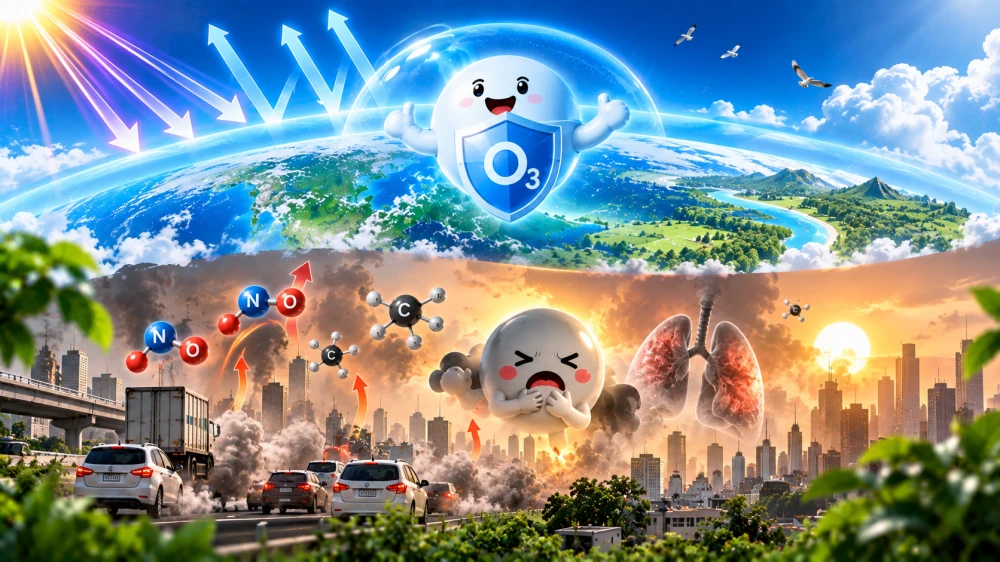
Ozone Fact 02 | The Dual Nature of Ozone: Atmospheric Shield vs. Pulmonary Toxin
- Good Ozone (Stratospheric Ozone): Located 15–35 kilometers aloft in the stratosphere, this layer acts as an essential shield against harmful UV-B radiation, protecting terrestrial life from skin cancer and cataracts.
- Bad Ozone (Ground-Level Ozone): The ozone present in the ambient air we breathe is not emitted directly from tailpipes. It is a secondary air pollutant formed when nitrogen oxides (NOx) and volatile organic compounds (VOCs) react under intense sunlight and heat. Exposure triggers ocular irritation, chest tightness, and respiratory damage.
Every reduction in private vehicle use disrupts these precursor emissions, curbing ground-level ozone pollution at the source.
A Milestone Step: "Serm Sang Help Plus" Towards Green Commuting
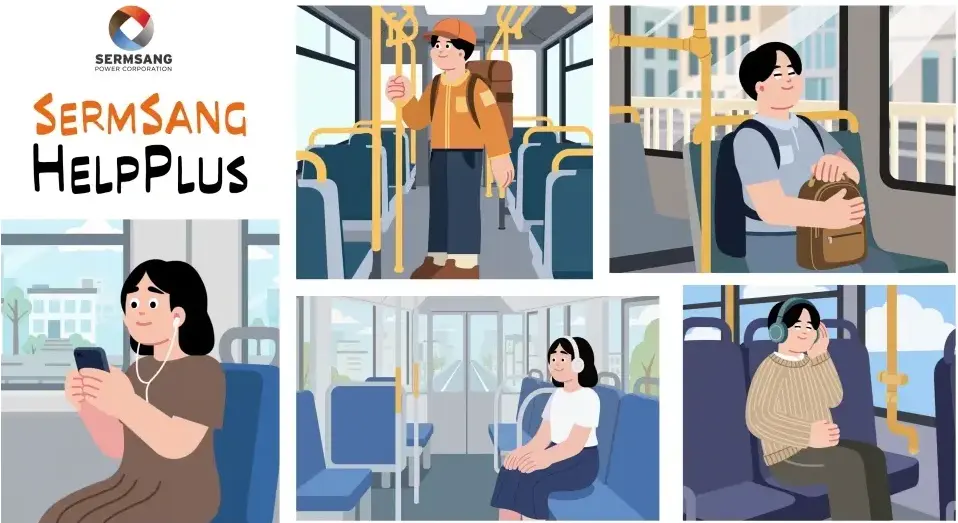
Environmental stewardship must advance alongside employee well-being. SSP established the "Serm Sang Help Plus" https://sustainability.sermsang.com/en/projects/198/serm-sang-help-plus-project initiative—a green commute campaign encouraging employees to transition from personal vehicles to 100% clean-energy public transit. Supported through subsidized HOP Cards for electric municipal buses, this pilot began with an initial cohort of six employees to generate three distinct dimensions of shared value:
- Planet: Every kilometer traveled by electric bus directly eliminates greenhouse gas emissions and urban particulate matter (PM 2.5), driving down indirect value-chain emissions (Scope 3) to advance our transition into a genuinely green enterprise.
- People: Subsidies alleviate living expenses equitably while mitigating the daily stress of traffic congestion, restoring safety, well-being, and valuable personal time.
- Governance: Commuting data and direct feedback from the pilot cohort are systematically evaluated to establish an empirical framework for expanding the program to other transit networks.
Sustaining Momentum: World Ozone Day 2026

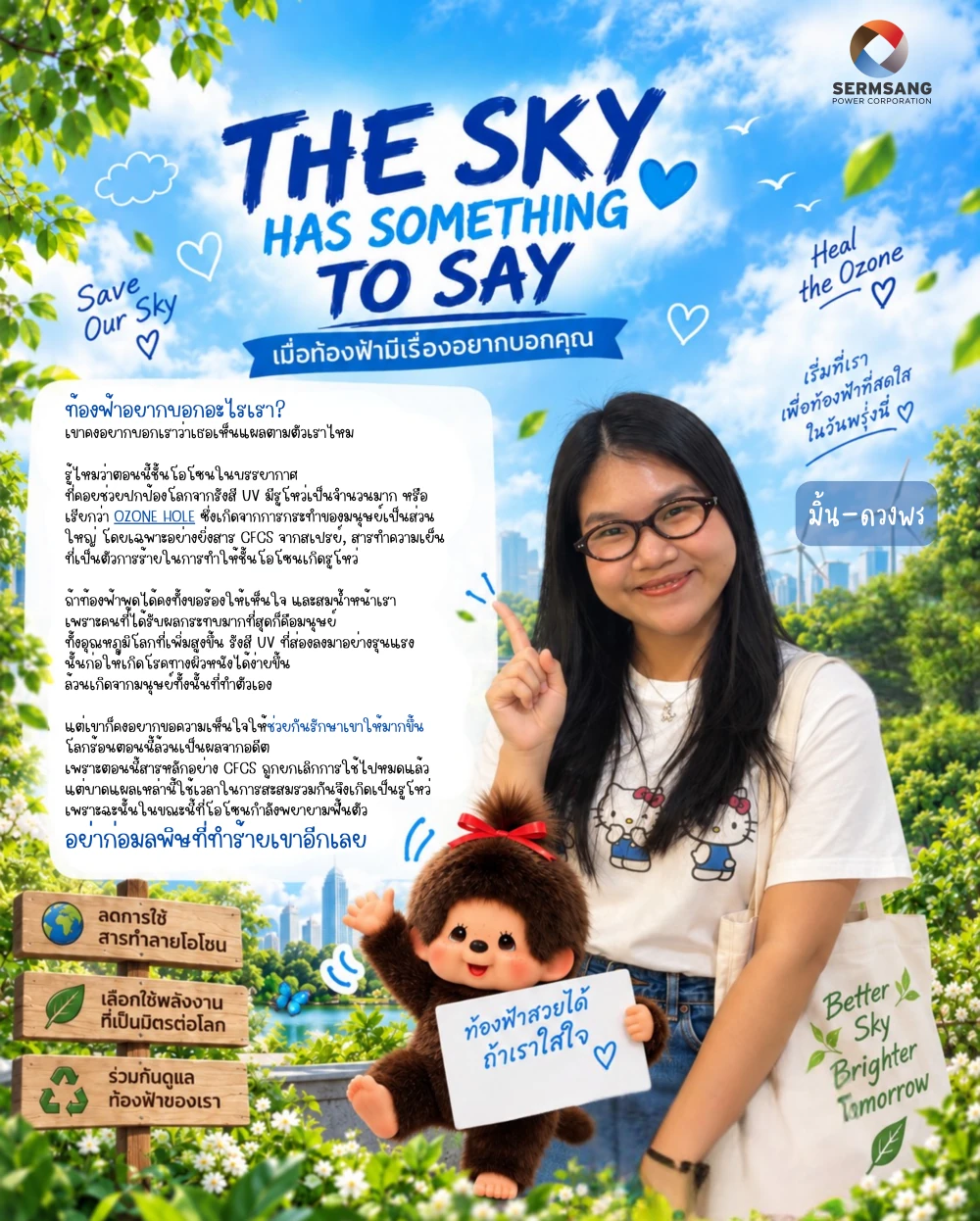
In observance of World Ozone Day, the company hosted the campaign “THE SKY HAS SOMETHING TO SAY.” The initiative provided a creative platform for staff to voice their environmental commitments while scaling the green commute ethos across the entire organization. Participants received BTS SkyTrain passes, encouraging the Sermsang community to choose low-emission public transit, reduce urban air pollution, and restore clear skies.
A clear sky does not occur by chance; it is built through our collective actions. Protect the Earth's shield and restore clean air to our cities by rethinking your commute, adopting sustainable habits, and stepping forward into a low-carbon future with Sermsang.
References
- Global Warming Potential (GWP) of Refrigerants: Intergovernmental Panel on Climate Change (IPCC), Fifth Assessment Report (AR5): Climate Change 2013: The Physical Science Basis (100-year GWP metrics for R-410A and R-32).
- Montreal Protocol and the Kigali Amendment: United Nations Environment Programme (UNEP), Ozone Secretariat – The Montreal Protocol on Substances that Deplete the Ozone Layer and the Kigali Amendment.
- Formation of Ground-Level Ozone and Health Impacts: United States Environmental Protection Agency (US EPA), Ground-level Ozone Pollution: Basic Information & Health Effects.
- Corporate Carbon Accounting Frameworks: World Resources Institute (WRI) and World Business Council for Sustainable Development (WBCSD), Greenhouse Gas Protocol: Corporate Value Chain (Scope 3) Accounting and Reporting Standard (Category 7: Employee Commuting).
Gallery