


10 July 2026
Demystifying Life Cycle Assessment (LCA) in Solar Farms From Cradle to Grave for True Sustainability
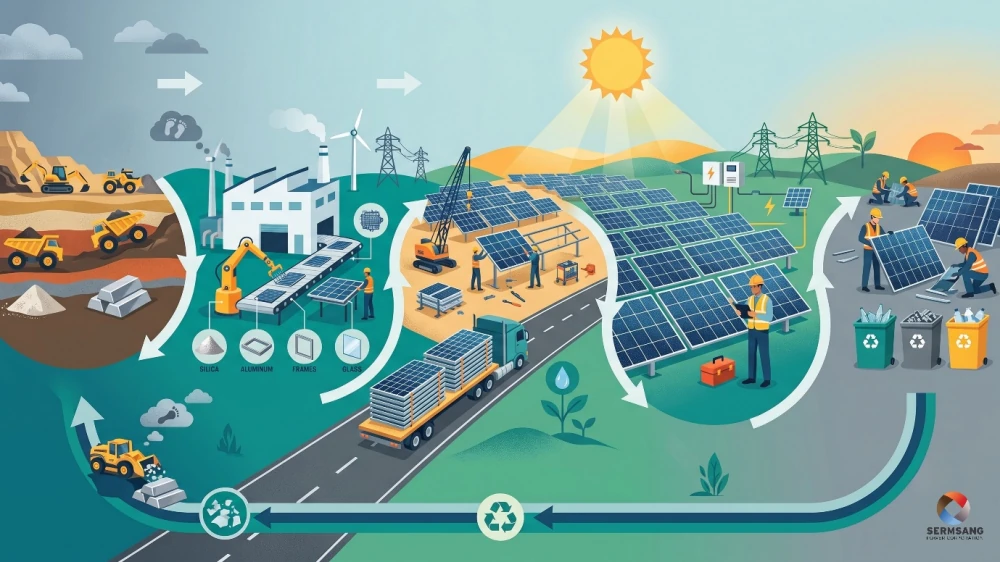
Life Cycle Assessment (LCA)
LCA is an environmental assessment tool used to evaluate the comprehensive environmental impacts of a product throughout its entire life cycle—from raw material extraction, manufacturing, and transportation to its use phase and final end-of-life disposal.
Advantages of LCA
- Identifying Hotspots: Completing all 5 stages of an LCA allows organizations to pinpoint "Hotspots “the stages with the highest environmental impacts—enabling them to optimize and improve their processes effectively.
- Holistic Visibility: It provides a comprehensive view of both direct and indirect impacts occurring at every stage of the life cycle.
- Broader Environmental Scope: Beyond greenhouse gas emissions (carbon footprint), LCA covers other critical environmental dimensions, such as ozone depletion and human health impacts. This holistic data empowers organizations to drive their operations toward sustainability efficiently.
LCA of SSP Solar Farm (Scope: Cradle to Grave)
1. Use of Raw Materials
- Acquisition of solar panels and component materials: Even if the organization does not manufacture the solar panels itself, it must assess their acquisition. This represents an indirect, upstream impact of the solar power plant system. Note that actual sunlight is an inexhaustible natural energy input, so it is not categorized as a raw material.
2. Manufacturing
- Solar panel production and power plant construction: This stage evaluates the environmental impacts resulting from the manufacturing and installation of solar panels and balance of system (BOS) components, including inverters, steel structures, cables, and transformers.
3. Distribution
- Logistics and transportation: This involves assessing the impacts of transporting solar panels, electrical equipment, and other materials from factories to the solar farm installation site, as well as transportation throughout each supply chain step. Potential impacts include greenhouse gas emissions and air pollution from fuel consumption.
4. Use
- Operations and maintenance (O&M): Once operations begin, this stage evaluates the impacts generated during power production throughout the system's operational lifespan. This includes the functioning of solar panels, inverter systems, and equipment maintenance. Although solar power generation emits significantly fewer greenhouse gases than fossil fuels, it still carries other environmental impacts, such as water consumption for cleaning panels, component replacements, and waste generated from maintenance activities.
5. End of Life
- Decommissioning and waste management: At the end of the project's life cycle, this stage assesses the impacts of decommissioning the system, handling equipment scrap, and disposing of materials.
- The Power of Recycling: Integrating recycling into this stage drastically mitigates decommissioning impacts. Recycling reduces the demand for virgin resources and minimizes long-term environmental burdens.
- Glass ⟶ Construction materials / Fiberglass
- Silicon ⟶ New solar panel manufacturing
- Aluminum Frame ⟶ Recycled Aluminum
Did You Know?!
Which stage of establishing a solar power plant has the highest hotspot? An unexpected stage for many is "Manufacturing." When evaluating the entire life cycle, data shows that the construction and installation phase generates the highest impact because it encompasses equipment manufacturing, infrastructure construction, and solar farm system deployment.
How can we mitigate this Hotspot?
- Utilize eco-friendly construction materials.
- Procure solar panels and equipment that provide verified LCA data (e.g., EPDs).
- Optimize logistics and installation planning for maximum efficiency.
- Increase the use of recycled materials to reduce the consumption of virgin resources.
Conclusion
LCA opens a holistic perspective, capturing the entire spectrum of operational impacts from upstream to downstream. It illustrates how every stage is interconnected. Recognizing the impacts at each stage prevents the "shifting" of environmental burdens from one point to another. Ultimately, this understanding forms a vital foundation for effectively driving an organization toward Net Zero goals, ensuring long-term business resilience and sustainability.
Article by: Duangporn Ngamyujorern
References
- Life Cycle Assessment Kopie von V1 Task 12 Life Cycle Assessment Fact Sheet
- IEA-PVPS Task 12 Fact Sheet: Environmental Life Cycle Assessment of Electricity from PV Systems – 2023 Data Update PDF Document